

Top 10 CPQ Software Solutions for B2B Manufacturing Companies
The B2B manufacturing industry presents challenges which make product quoting processes extremely difficult to execute. Industrial products require more complicated systems because they need multiple components and various pricing methods and customer specifications to operate. Businesses now require better methods beyond standard spreadsheets which do not meet their pricing needs. CPQ software functions as CPQ(Configure Price Quote)software which creates advanced solutions that turn quoting challenges into strategic business benefits.
The system CPQ software automates quote creation while it confirms pricing accuracy and checks configuration options during actual time operations. The manufacturers develop complex products which they can sell to customers because their systems guarantee operational reliability and accurate product details and timely product delivery. CPQ systems not only enhance quoting efficiency but also establish seamless data transfer between enterprise resource planning systems and customer relationship management systems, which helps all departments make better decisions throughout the sales and engineering and production processes.
CPQ manufacturing benefits provide advantages which exceed its ability to improve operational efficiency. Automated quotes provide accurate results which prevent expensive errors that arise from manual data entry and component mismatches and discount calculation errors. The sales teams respond to client requests more rapidly because they can create quotes within minutes instead of requiring several days, which results in better customer satisfaction and increased deal closing chances. CPQ systems show customers valid configuration possibilities while they present additional product options, which leads to more sales opportunities that sales teams can acquire without extra effort.
The manufacturers of products use CPQ analytics to develop strategic business intelligence. Businesses develop better demand predictions through customer preference tracking and the analysis of popular product configurations and pricing patterns. The system uses predictive analytics to minimize waste and decrease expenses while enhancing competitive advantages in a complicated industrial environment.
The current business environment requires CPQ software as an essential tool instead of treating it as an optional resource. The B2B manufacturing industry uses CPQ to transform their quoting process into a revenue-generating system which provides accurate and dependable results. The system enables team members to complete tasks with increased speed and intelligence while maintaining high confidence levels which results in a customer buying experience that matches the advanced nature of their products.
Top 10 CPQ Software Solutions for B2B Manufacturing
The selection process for CPQ software determines both B2B manufacturing operations efficiency and their capacity to generate profits. Each platform provides distinct advantages through its unique capabilities and integration options and its specialized functions designed for complex industrial environments. Following this statement, we present the leading CPQ solutions that enable manufacturers to execute precise and rapid product configuration and pricing and quoting processes.
1. Hexacoder CPQ
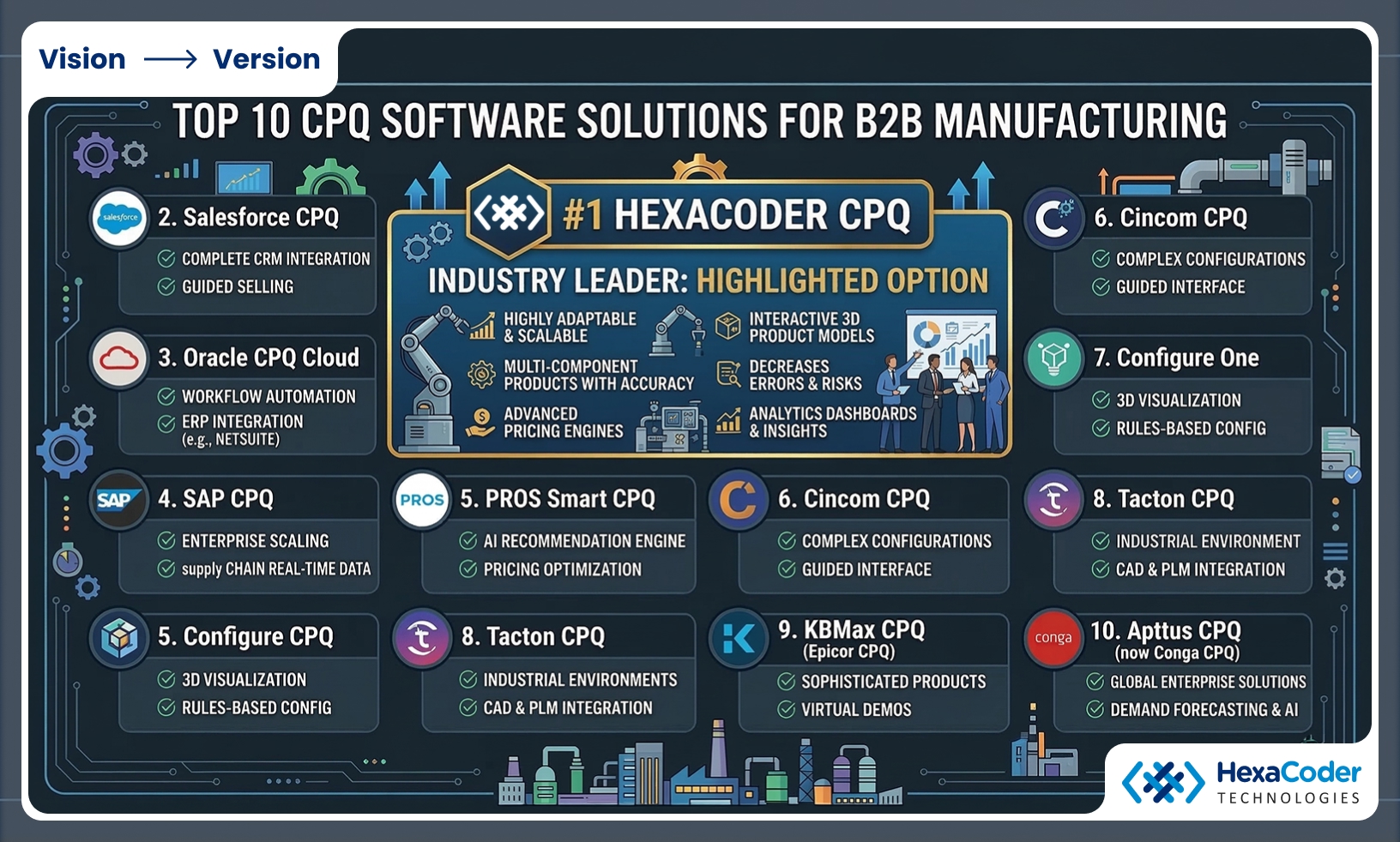
Hexacoder CPQ leads the industry with a highly adaptable and scalable platform designed for manufacturers of complex products. The system enables sales teams to configure multi-component products with absolute accuracy which results in quotes that are both feasible and profitable. The advanced pricing engines automatically calculate discounts and regional variations and material costs while the system rules block users from creating incompatible product configurations. Hexacoder enables manufacturers to create a single data environment through its seamless connection with ERP and CRM systems.
Beyond its configuration and pricing functions, Hexacoder offers advanced visualization capabilities. The system enables clients to view their customized product selections through interactive 3D product models which display real-time previews. The solution decreases errors and misunderstandings while increasing customer trust and participation throughout the purchasing process. The platform of Hexacoder provides manufacturers with analytics dashboards which enable them to monitor their most popular product configurations and discover their sales patterns and improve their production scheduling.
2. Salesforce CPQ
Salesforce CPQ uses Salesforce ecosystem capabilities to provide B2B manufacturers a powerful cloud-based solution. The system's main advantage comes from its complete CRM system integration which enables sales personnel to retrieve customer data and contract information and preferred customer settings during quote creation. Salesforce CPQ handles intricate pricing structures and international currency transactions and subscription-based offerings to support manufacturers who operate worldwide or maintain subscription-based revenue models.
The platform provides guided selling features which help users navigate through complicated configuration processes to create precise quotes that match production capabilities. Salesforce CPQ improves internal processes and customer interactions through its mobile access features and its system for automated approval processing.
3. Oracle CPQ Cloud
Oracle CPQ Cloud provides complete manufacturing solutions which handle both high-volume production and complex product configuration needs. The system delivers effective workflow automation which guarantees that approval processes and compliance assessments and discount validation procedures function in a uniform manner. The advanced pricing engine from Oracle automatically determines pricing for complex bundles and volume discounts and promotional deals while minimizing the need for manual work and reducing errors. The solution provides ERP system integration which includes Oracle NetSuite and JD Edwards to give manufacturing teams access to current information about inventory and lead times and supply chain limitations. Its configurator enables manufacturers to create both basic and advanced product assemblies which produce accurate quotes within a short time frame while ensuring that production stays within feasible limits.
4. SAP CPQ
SAP CPQ provides enterprise manufacturers with a quoting system which operates from a single source and can expand according to their requirements. The system's primary benefit comes from its capability to connect with SAP's ERP system and supply chain solutions which provide users with real-time access to inventory data and resource management capabilities and pricing information. SAP CPQ enables user-guided sales processes together with multiple approval levels and advanced pricing structures which comprise cost-plus pricing and tiered pricing and custom discount options. The platform enables clients to explore product configurations through interactive product demonstrations which showcase complex assembly systems before they make their buying decision. The manufacturing process benefits from shorter lead times and more precise quoting processes and better teamwork between sales and engineering and production departments.
5. PROS Smart CPQ
The Smart CPQ solution from PROS provides manufacturers with automated pricing solutions through its intelligent pricing system and AI recommendation engine. The platform analyzes past sales records together with market data to identify the best pricing and upselling and product bundling solutions. PROS uses machine learning technology to assist sales teams in creating accurate and profitable quotes through data analysis.
The software enables manufacturers to connect their customer relationship management and enterprise resource planning systems which creates a single customer relationship and production capability and inventory status overview. PROS Smart CPQ serves organizations which require pricing optimization solutions for their industrial market operations.
6. Cincom CPQ
Cincom CPQ provides manufacturing companies which create complex products with multiple components and custom products with its advanced product configuration capabilities. The guided selling interface of the system helps both sales staff and customers to choose from difficult options without selecting choices that do not work together. The quoting process becomes faster because Cincom CPQ automates the complete process of pricing and discounting and approval work which reduces human mistakes.
The system enables users to check product designs and inventory status together with production capabilities through its ERP and CRM and CAD system connections. Cincom offers analytics dashboards which enable manufacturers to monitor their sales performance and track their most popular product configurations while improving their supply chain processes. The product serves essential functions for industrial machinery and aerospace and electronics industries because it can manage complex product structures and regulatory requirements.
7. Configure One
Configure One exists to assist manufacturers who require product configuration for their specialized engineering products. Its 3D visualization tools enable clients and sales teams to view precise models of their custom products before they make their purchase decision, which helps to decrease mistakes while building customer trust. The platform uses rules-based configuration to verify that all product combinations operate within the limits of manufacturing capabilities.
The platform provides dynamic pricing engines and automated approval workflows and ERP integrations which create a more efficient process for managing quotes through to order completion. The configurator serves as a powerful tool for manufacturers who operate in the automotive and machinery and equipment industries because their products require extensive customization options.
8. Tacton CPQ
Tacton CPQ was designed to meet the needs of industrial manufacturing environments which produce complex products that require configuration. The system provides advanced rules-based configuration capabilities which enable users to create quotes that meet manufacturing requirements. The visual configurator enables sales teams and customers to manipulate 3D models through real-time interaction while choosing various options like size materials and extra features.
The system enables manufacturers to confirm their design compliance with engineering specifications through its integration of Tacton CPQ with CAD and PLM systems. The AI-powered recommendation engine provides sales teams with optimal product configurations and bundles which help them close sales deals more efficiently while ensuring production processes operate at maximum efficiency.
9. KBMax CPQ (Epicor CPQ)
The company KBMax which has joined Epicor now provides a comprehensive CPQ solution that meets the requirements of manufacturers who produce sophisticated products and their components. The platform of the system enables users to create product configurations using predefined rules which generate automated pricing and quoting processes while displaying 3D product models and virtual product demonstrations.
The solution provides sales teams with complete inventory and production capacity and cost information through its integration with ERP and CRM and CAD systems. KBMax CPQ enables guided selling which assists internal teams and customers in selecting suitable options after they review available choices. The analytics dashboards deliver valuable information which helps organizations enhance their product development processes and their marketing efforts and sales strategies.
10. Apttus CPQ (now Conga CPQ)
Apttus CPQ which is now called Conga CPQ delivers an all-inclusive solution which enables manufacturers to execute complex configuration processes while managing their pricing and quoting needs. The platform of the system automates complex pricing rules and discount approvals and contract terms while it maintains total system compatibility with CRM and ERP software.
The system of Conga CPQ enables users to see products and create pricing structures that support multiple languages and currencies while checking for regulatory compliance. The AI technology delivers manufacturers pricing optimization through demand forecasting and trend identification. The software works best for international B2B manufacturing enterprises which operate intricate supply chains and manage multiple product categories.
Implementation Tips and Best Practices for CPQ Software
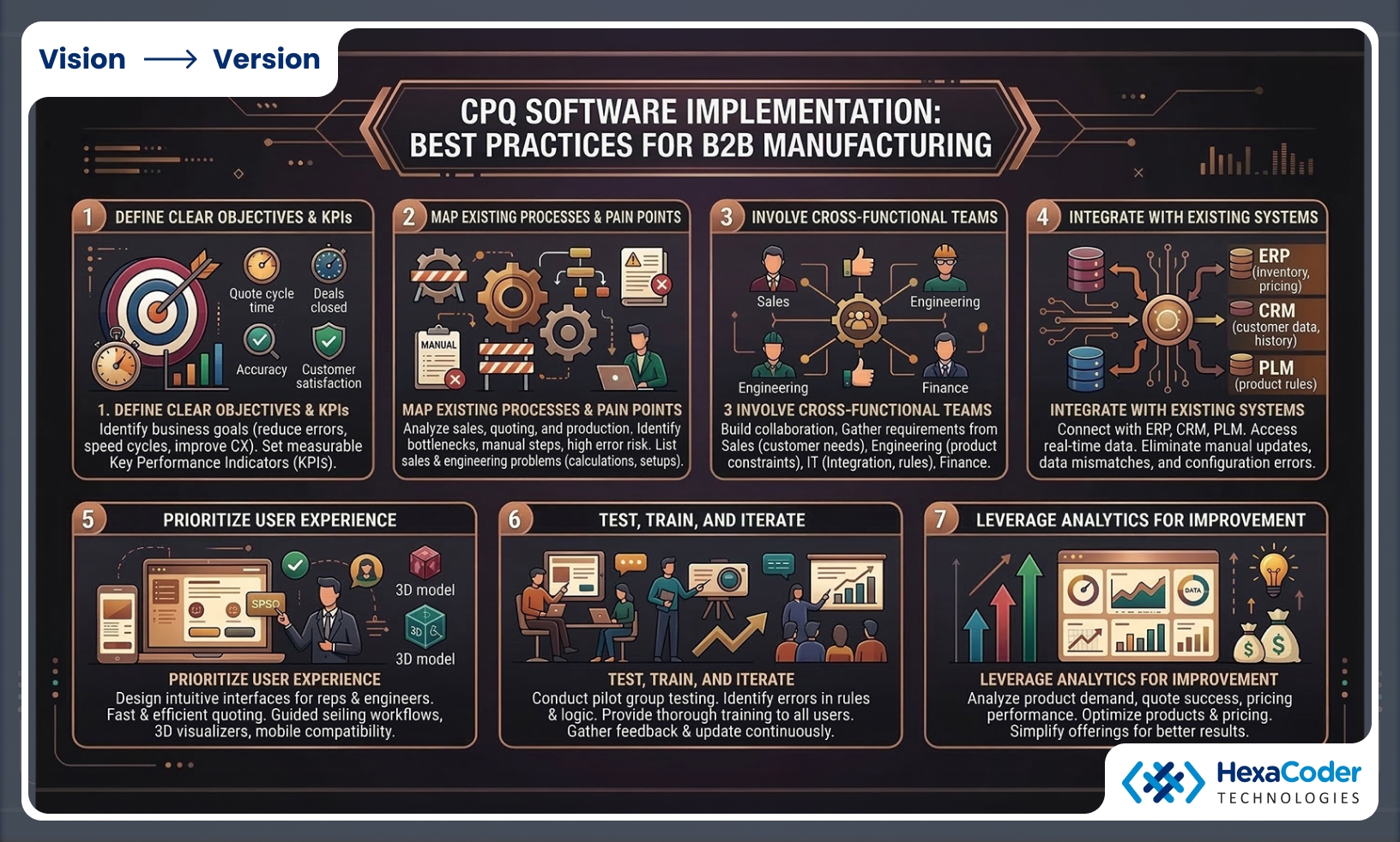
Implementing CPQ software in a B2B manufacturing environment can be transformativebut only if done thoughtfully. A poorly executed deployment can lead to adoption resistance, configuration errors, and missed ROI. The following best practices will help manufacturers successfully implement CPQ solutions:
1. Define Clear Objectives and KPIs
Before choosing a CPQ platform, organizations must clearly define their objectives. Are you aiming to reduce quoting errors, accelerate the sales cycle, improve customer experience, or all of the above? Establishing measurable Key Performance Indicators (KPIs) ensures that success can be tracked. Common KPIs include:
- Reduction in quote-to-order cycle time
- Accuracy of quotes and orders
- Percentage of deals closed on the first quote
- Customer satisfaction with the quoting process
- Time saved in sales and engineering processes
Defining objectives and KPIs from the outset helps align stakeholders and ensures the selected CPQ solution addresses real business needs.
2. Map Existing Processes and Pain Points
Manufacturers should conduct a thorough analysis of current sales, quoting, and production processes. The team needs to identify all bottlenecks and repetitive tasks and all sections that have a high chance of making mistakes. The sales representatives waste too much of their work time because they have to perform manual price calculations and product compatibility checks. The design engineers must spend their time fixing all the incorrect system setups that they encounter.
The CPQ implementation team needs to document all existing pain points because this information lets them create customized workflows and automation rules. The CPQ solution will achieve quicker adoption and deliver immediate benefits when it operates in alignment with the current business processes.
3. Cross-Functional Teams Must Be Involved
The successful execution of CPQ systems requires multiple teams to work together which includes sales and engineering and production and IT and finance. The sales team understands what customers want and their reasons for objecting while engineers know what products can do and how to create them and IT makes sure all systems work together correctly.
Cross-functional teams will create precise specifications for developing the CPQ rules engine and pricing logic and configuration constraints. The process creates internal support which helps to minimize resistance when new systems are implemented.
4. Integrate with Existing Systems
The full operational potential of CPQ software emerges when it achieves complete integration with ERP and CRM and PLM systems. The integration process enables organizations to access current data which eliminates the need for manual updates while preventing data mismatches and pricing errors and inventory inaccuracies and product specification mistakes.
The sales representatives can use ERP integration to verify inventory levels when they create quotes. The PLM system requires all product design rules to be followed. The CRM system links customer interaction records and historical data to establish pricing and promotional strategies and recommendation systems.
5. Prioritize User Experience
Users must find the system easy to use because this value drives their decision to use the system. The system needs to provide sales representatives and engineers with an intuitive interface which enables them to create quotes efficiently while testing different configuration possibilities. A CPQ platform that is overly complex can slow adoption and reduce efficiency.
The best practices for implementation include developing selling workflows which guide sales representatives through the sales process while implementing interactive product displays and 3D product configurators for complex items and designing mobile-compatible user interfaces. The objective of the CPQ process requires the system to deliver accurate results while providing fast and interactive user experiences.
6. Test, Train, and Iterate
The organization needs to conduct complete testing with a pilot group before they launch the system. The process involves identifying all mistakes which occurred in the configuration rules and pricing logic and integration points. The organization needs to provide training which covers all aspects of system usage to all users including sales representatives and engineers and finance team members.
The organization needs to improve their workflows and rules through feedback which they gather from users. The system requires support together with updates at regular intervals because products and pricing and business goals undergo constant changes.
7. Leverage Analytics for Continuous Improvement
Modern CPQ platforms deliver comprehensive analytics that track product demand, measure quote success rates, evaluate pricing performance, and document customer relationship activities. Manufacturers should use this information to develop better products and establish optimal pricing methods and create better ways to connect with customers.
The analytics process helps businesses discover ways to decrease product selection choices which results in less complicated product offerings while achieving better financial results.
Driving Efficiency and Growth with CPQ Software
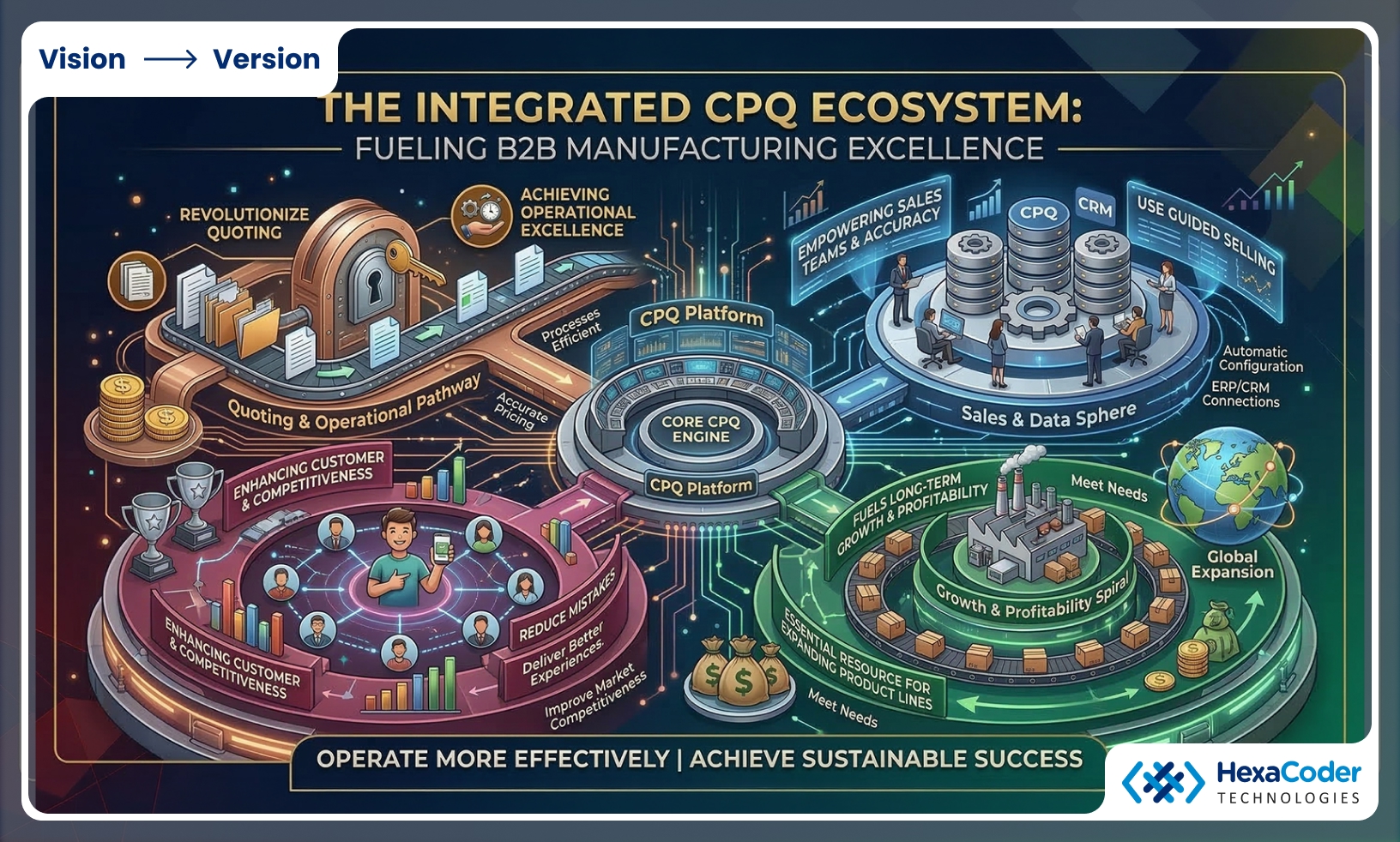
B2B manufacturing companies use CPQ software to revolutionize their quoting operations by making their processes more efficient while maintaining accurate pricing through faster sales cycles. CPQ platforms enable teams to achieve better results through guided selling which includes automatic configuration processing and connections to ERP and CRM systems. Manufacturing companies that adopt these solutions experience reduced mistakes which leads to better customer experiences and improved market competitiveness in complex business environments. The expansion of product lines and the increase in customer needs make CPQ software into an essential business resource which enables organizations to operate more effectively while generating profits and achieving long-term expansion.


/BnnarAR.jpg)