Hexacoder Technologies

Custom digital twin solutions for smarter operations

Connect physical assets with real-world data through custom digital twin software to monitor performance, identify potential issues, and make better operational decisions.

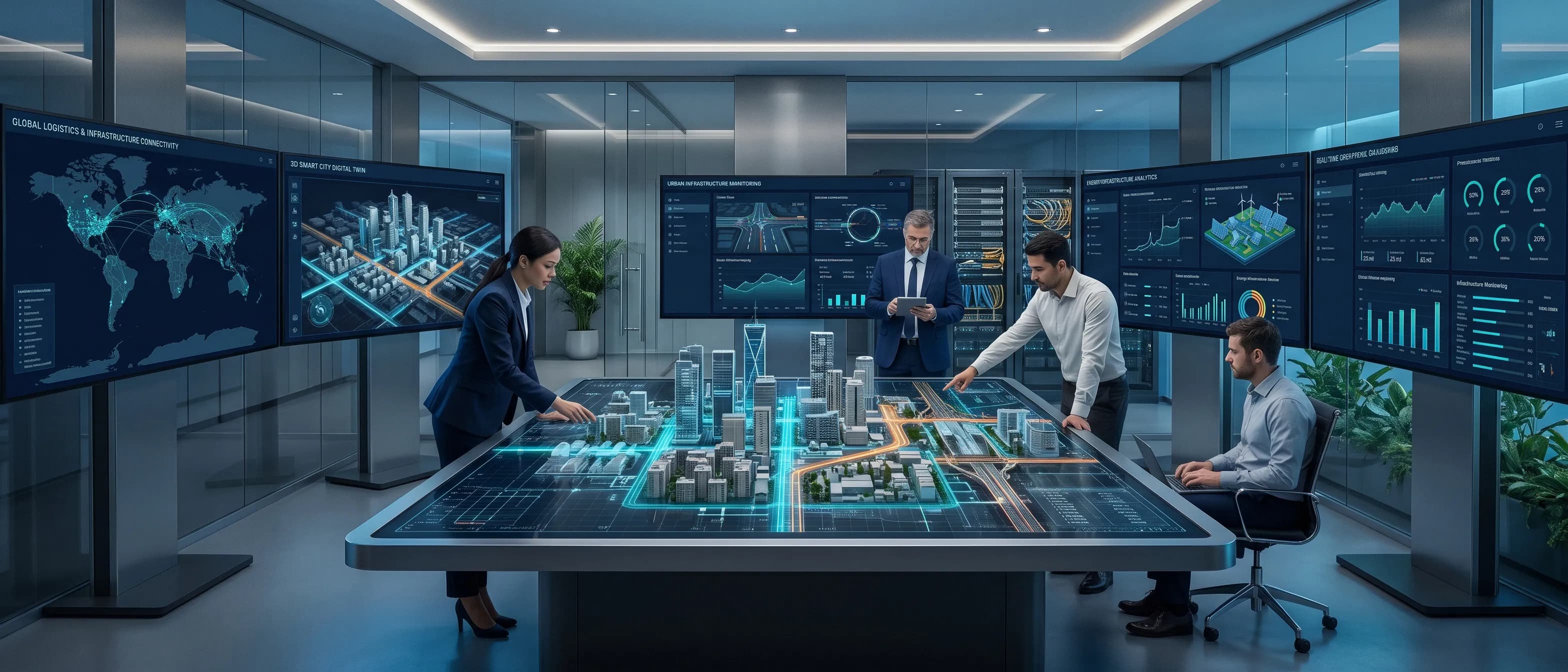
Operations team working around a 3D city digital twin on an interactive table, with infrastructure monitoring dashboards on the surrounding screens

Digital twin explained

What is a digital twin and how does it work?

A digital twin is a digital representation of a physical asset, product, process, or system connected to relevant real-world data. It helps businesses understand asset conditions, analyze performance, and evaluate changes through a connected digital environment.

  • Physical asset

    A machine, vehicle, facility, or infrastructure system provides the physical foundation for the digital twin. Its components, operating conditions, and relevant characteristics determine what needs to be represented.

  • Digital representation

    A digital model represents the asset's structure, components, and relationships. Depending on the application, this may include interactive 3D geometry, engineering information, and associated asset records.

  • Connected operational data

    Sensors, equipment records, and business applications supply relevant information about the physical asset. The digital twin receives updates according to the available data sources and integration architecture.

  • Monitoring and analysis

    The connected model helps users interpret asset information, examine operating conditions, and evaluate supported scenarios through visualization and analytical tools.

Business challenges

What problems can
digital twin technology solve?

Disconnected information, limited asset visibility, and costly physical testing make complex operations difficult to manage. Digital twin technology can help address these challenges by connecting physical systems with digital information.

  • Limited operational visibility

    Traditional reporting may not provide a complete view of equipment conditions. Teams can struggle to identify unusual behavior until it affects productivity, safety, or equipment availability.

  • Unexpected equipment downtime

    When equipment performance is difficult to monitor, developing issues may remain unnoticed. Unplanned failures can interrupt operations and create additional maintenance and repair costs.

  • Expensive physical testing

    Testing new equipment settings, facility layouts, or engineering changes in physical environments can require downtime, materials, and resources that increase project costs.

  • Disconnected asset information

    Engineering specifications, maintenance records, sensor readings, and operational information often exist in separate systems. This makes it difficult to understand an asset's complete condition and history.

  • Risky operational decisions

    Changes to complex equipment or infrastructure can have unexpected consequences. Without suitable analytical tools, teams may struggle to evaluate potential outcomes before implementation.

Digital twin solutions we develop
for your business

From industrial equipment to connected infrastructure, HexaCoder develops custom digital twin solutions that help businesses visualize physical assets, access operational data, and make informed decisions.

Key features of our custom
digital twin software

HexaCoder combines digital twin modeling, connected data, and tailored software functionality to build solutions around your assets and operational requirements.

  1. 01

    Interactive 3D asset visualization

    Explore equipment, facilities, and complex systems through interactive 3D models. Navigate asset structures, inspect supported components, and access associated technical information.

  2. 02

    Real-time data synchronization

    Connect supported data sources to update digital twin information at the frequency required by the application, helping teams access relevant operating conditions.

  3. 03

    Custom monitoring dashboards

    View equipment status, operational parameters, and selected performance indicators through dashboards designed around specific assets and user requirements.

  4. 04

    Alerts and event notifications

    Define monitoring conditions and notification rules for supported events, such as equipment status changes or values exceeding established thresholds.

  5. 05

    Asset hierarchy management

    Organize facilities, equipment, assemblies, and individual components into structured relationships that make complex asset information easier to navigate.

  6. 06

    Historical performance tracking

    Access recorded measurements, operating events, and relevant trends to investigate asset behavior and compare performance across different periods.

  7. 07

    Predictive analytics integration

    Connect suitable analytical or machine learning models with relevant operational data to support anomaly detection and potential failure assessment.

  8. 08

    Simulation and scenario analysis

    Develop interfaces for supported engineering models and simulations that help teams evaluate potential operating conditions or proposed changes.

Development process

How we develop and implement
digital twin solutions

HexaCoder provides bespoke digital twin development services, from initial requirements and digital modeling to software implementation and integration with existing systems.

Integrations

Digital twin integration with IoT, ERP, and
industrial systems

A digital twin depends on reliable access to relevant asset information. HexaCoder develops custom integration workflows that connect physical equipment, operational platforms, and business applications.

IoT sensors and connected devices

Collect supported equipment measurements, including temperature, pressure, vibration, and operating status, through connected sensors and IoT infrastructure.

SCADA and industrial monitoring systems

Integrate relevant process and equipment information from supported industrial monitoring environments to provide operational context within the digital twin.

MES and manufacturing systems

Connect production information, equipment records, and relevant manufacturing data to support asset-level and production-related views.

ERP and business applications

Access applicable maintenance, inventory, asset, and business information through supported ERP interfaces and enterprise application integrations.

CAD, PLM, and engineering systems

Use available engineering models, product structures, and technical records to maintain relevant asset representations and associated design information.

Cloud platforms and custom APIs

Build data exchange services and application interfaces for supported cloud infrastructure, databases, and existing enterprise systems.

Business benefits

Business benefits of digital twin technology

Digital twin technology can help businesses improve operational understanding, evaluate changes, and make better use of asset information. The outcomes depend on the available data, analytical capabilities, and implementation scope.

  • Reduce unplanned equipment downtime

    Connected monitoring and suitable predictive models can help teams identify developing equipment issues earlier, supporting more proactive maintenance planning.

  • Improve asset performance

    Analyze operating information and performance trends to identify opportunities for improving equipment utilization, operating conditions, and resource allocation.

  • Reduce physical testing costs

    Where reliable simulation models are available, teams can evaluate selected design or operational changes virtually before investing in physical testing.

  • Support safer operational decisions

    Use digital representations and appropriate analytical tools to assess potential effects of proposed changes without immediately applying them to live equipment or infrastructure.

  • Improve maintenance planning

    Combine equipment history, operating conditions, and relevant analytical insights to support more informed maintenance scheduling and asset management.

  • Make asset information easier to access

    Bring relevant technical and operational information into a connected environment so authorized teams can work with a clearer understanding of asset conditions.

  • Support asset lifecycle management

    Maintain useful connections between engineering information, operational records, and maintenance history to support decisions as assets are modified, maintained, or replaced.

  • Enable data-driven improvements

    Use historical information and operational analysis to identify recurring issues, evaluate performance changes, and prioritize improvements based on available evidence.

FAQs

Frequently asked questions

Start growing your business